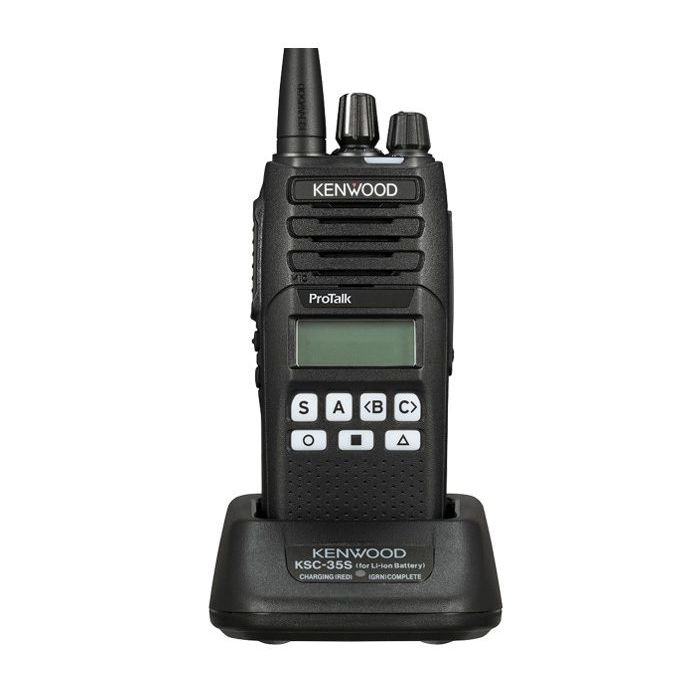
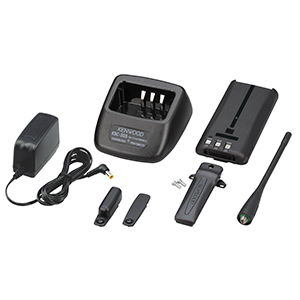
Kenwood TK-3710 UHF CB Radio Australia | IP67 Two-Way Radio
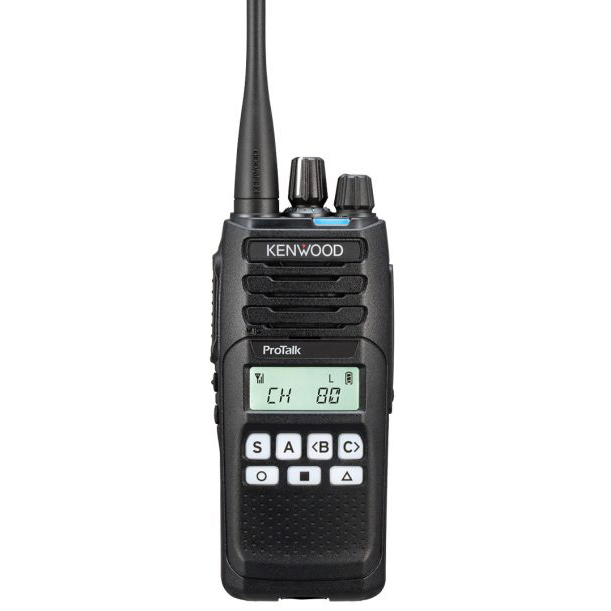
The Kenwood TK-3710 is a rugged, licence-free UHF CB radio designed for reliable communication in demanding Australian environments. Built with IP67 waterproof protection, loud 1W audio, and simple operation, it is ideal for construction sites, security teams, warehouses, events, farms, and outdoor operations.
With optional commercial channel capability, the TK-3710 offers flexibility for businesses needing dependable communication today and scalable solutions tomorrow.
- Licence-free 80-channel UHF CB radio
- IP67 waterproof and dustproof protection
- Loud and clear 1W audio output
- Commercial channel mode ready
- Easy-to-use ergonomic design
- Ideal for business and recreational use
$530.45
Get A Quote
Australia Wide Delivery
Fast & Reliable
Expert Support
Specialist Advice
System Designed
Tailored Solutions
Kenwood TK3710 UHF CB Radio for Business & Outdoor Communication
The Kenwood ProTalk TK-3710 is a professional-grade UHF CB two-way radio built for users who need reliable communication in harsh Australian conditions. Whether your team operates on a construction site, warehouse floor, event venue, farm, or security patrol, the TK-3710 delivers clear communication with simple operation and rugged durability.
Unlike basic walkie talkies, the TK-3710 combines commercial-grade performance with licence-free UHF CB operation. Therefore, businesses can deploy dependable communication quickly without the complexity of licensing requirements.
Additionally, the TK-3710 can be enhanced with commercial channel capability through programming, making it a flexible solution for growing businesses and professional operations.
Built Tough for Australian Conditions
The Kenwood TK-3710 is designed to handle demanding environments where ordinary radios may fail. It meets IP54, IP55, and IP67 protection ratings, allowing it to withstand dust, rain, mud, and temporary water immersion.
This makes it ideal for industries where radios are exposed to rough handling, outdoor weather, and dusty work environments.
The radio also meets multiple MIL-STD 810 environmental standards for durability and long-term reliability.
Loud & Clear Audio Performance
Clear communication is critical in busy and noisy workplaces. The TK-3710 delivers up to 1 watt of powerful audio output, helping workers hear messages clearly in warehouses, event venues, transport yards, and industrial environments.
Kenwood’s audio engineering helps reduce missed calls and improves communication efficiency during daily operations.
Simple Operation for Fast Team Deployment
The TK-3710 is designed for easy everyday use. The ergonomic controls, programmable buttons, and clear channel display help users operate the radio confidently with minimal training.
Features such as voice announcements, scanning modes, and colour LED indicators make communication simple for both experienced radio users and first-time operators.
Therefore, it is an excellent option for businesses wanting straightforward communication systems without unnecessary complexity.
Flexible for Commercial & Private Communication
While the TK-3710 operates as a licence-free 80-channel UHF CB radio, it can also support commercial channel operation when programmed correctly.
This flexibility allows businesses to start with standard CB communication and later upgrade to private communication systems as operational requirements grow.
Radio Industries can assist with:
- Radio programming
- Communication system design
- Commercial frequency solutions
- Accessories and headset integration
- Fleet communication setup
- Ongoing servicing and support
Improve Safety & Communication Efficiency
The TK-3710 supports features designed to improve worker safety and operational coordination, including:
- Emergency profiles
- Lone worker functionality
- CTCSS/DCS selective calling
- Priority channel scanning
- Duplex and simplex operation
These features help reduce unnecessary radio traffic while ensuring important calls are received quickly.
Accessories & System Compatibility
Radio Industries can supply the Kenwood TK-3710 with a wide range of professional accessories to suit different industries and working conditions.
Available optional accessories include:
- Remote speaker microphones
- Surveillance earpieces
- Heavy-duty headsets
- Vehicle chargers
- Multi-unit chargers
- Belt clips and carry solutions
- Commercial antennas
For high-noise environments, the TK-3710 can also be paired with professional communication headsets from leading brands including 3M Peltor, Bravo, and Sensear.
Key Features
Licence-Free UHF CB Operation
Operate on Australian 80-channel UHF CB frequencies without requiring a licence.
IP67 Waterproof & Dustproof
Built for demanding outdoor and industrial environments.
Loud 1W Audio
Clear communication even in noisy workplaces.
Commercial Channel Mode Ready
Upgradeable for professional business communication systems.
128 Channel Capability
Supports scalable communication setups for larger operations.
Long Battery Life
Supplied with high-capacity Li-ion battery options.
Programmable Emergency Features
Supports lone worker and emergency alert functionality.
Multiple Scan Modes
Monitor important communication channels efficiently.
Ergonomic Commercial Design
Simple controls and easy operation for everyday use.
Ideal Applications
Coordinate workers, supervisors, deliveries, and site safety teams.
Reliable communication for guards, crowd control, and patrol teams.
Improve team coordination across loading docks and warehouse floors.
Maintain clear communication between staff, security, and operations teams.
Reliable communication across large rural properties.
Industrial & Maintenance Teams
Support communication in noisy and challenging environments.
FAQs
Is the Kenwood TK-3710 licence-free?
Yes. The TK-3710 operates on Australian 80-channel UHF CB frequencies and does not require a licence for standard CB use.
Is the TK-3710 waterproof?
Yes. The radio meets IP67 waterproof and dustproof standards, allowing temporary water immersion under specified conditions.
Can the TK-3710 be used for business communication?
Absolutely. The TK-3710 is suitable for both recreational and commercial applications. It can also be programmed for commercial channel operation where permitted.
What industries commonly use the TK-3710?
The radio is widely used in construction, security, transport, warehousing, events, agriculture, and industrial operations.
Can I use headsets and speaker microphones with this radio?
Yes. Radio Industries supplies compatible remote speaker microphones, earpieces, and professional-grade headsets for improved communication and hearing protection.
You may also like…
-
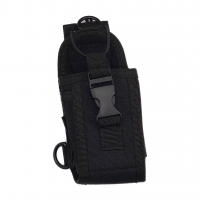
Bravo Nylon Radio Pouch – Tactical Black, Adjustable Fit
$49.99 Inc GST -
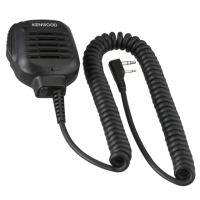
Kenwood KMC-45 Two-Pin Speaker Microphone
$156.99 Inc GST -
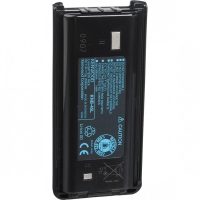
Kenwood KNB-84L Battery
$154.00 Inc GST -
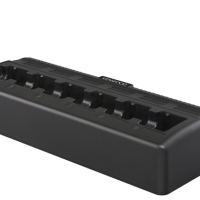
Kenwood KSC-356 Multi-Bay Rapid Charger
$1,170.21 Inc GST -
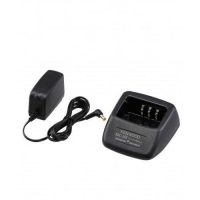
Kenwood KSC-35S Single Unit Charger
$145.37 Inc GST -
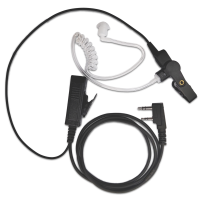
Bravo Heavy Duty Acoustic Tube Earpiece – Superior Clarity – K
$60.50 Inc GST
Additional information
| Weight | 3 kg |
|---|---|
| Dimensions | 35 × 25 × 10 cm |
| Channel Capacity | 128 |
| Side Connector | K |
| IP Rating | IP67 |
| Keypad | Half |
| Manufacturer | Kenwood |
| Screen | Yes |
| UHF CB | Yes |
| Battery Capacity | 2000mAh |
| Battery Type | Li-ion |
| Connector Type | K |
| Power (W) | 5W |
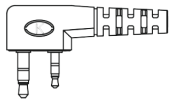
K
Kenwood Two Pin Right Angle
3.5mm Stereo + 2.5mm Mono
Kenwood:
TK-250/350, 260/360, 260G/360G, 270/370, 270G/370G, TK-3100(ProTalk), TK-3103(Free Talk XL), TK-3102(Pro Power), TK-2160/3160, TK-2170/3170, TL-3130(ProTalk XLS), 3131(Free Talk XLS), TK-2207/3307, TK-2317/3317, TK-3310, TK-2360/3360, NX220/320, NX240/340
Hytera:
HYT TC-368
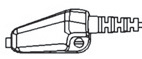
K2
Kenwood Multiple Pin
Kenwood:
TK-280, TK-290, TK-380, TK-385, TK-390, TK-480, TK-481, TK-2041, TK-2140, TK-3140, TK-3148, TK-2180, TK-3180, NX-200, NX300
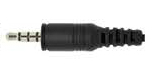
K4
Kenwood Single Pin
Kenwood:
PKT-23
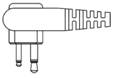
M
Motorola Two Pin Right Angle
3.5mm Mono + 2.5mm Mono
Motorola:
GP68, GP88, GP300, GP308, GP350, P040, P110, P1225, P1225LS, P2000, CP88, CP125, CP150, CP200, CT150, CT250, CT450, CT450LS, CP476, PRO2150, PRO3150, BRP40, EP450, MTH500, GTX, SP50, LTS2000, PR400
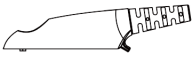
M4
Motorola Multiple Pin
Motorola:
HT750, HT1250, HT1250LS, HT1550, HT1550XLS, MTX850, MTX850LS, MTX900, MTX950, MTX960, MTX8250, MTX8250LS, MTX9250, PRO5150, PRO5350, PRO5450, PRO5550, PRO5750, PRO7150, PRO7350, PRO7450, PRO7550, PRO7750, PRO9150, PTX780, GP140, GP320, GP328, GP329, GP330, GP338, GP339, GP340, GP360, GP380, GP600, GP640, GP650, GP680, GP1280
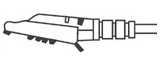
M5
Motorola Multiple Pin
Hytera Multiple Pin
Simoco Multiple Pin
Motorola:
EX500, EX600, GL2000, GP328Plus, GP338Plus, GP628 Plus, PTX760Plus, GP344, GP388, PRO5150Elite
Hytera:
TC380M, TC370M, TC780M, TC780
Simoco:
SRP9170, SRP9180, SDP650, SDP660
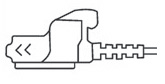
M6
Motorola Multiple Pin
Motorola:
GP900, GP9000, HT1000, JT1000, MT2000, MTS2000, MT6000, MTX838, MTX900, MTX1000, MTX8000, MTX9000, MTXLS, XTS2000, XTS2500, XTS3000, XTS3500, XTS5000, XTS5100, XTS7700

M7
Motorola Multiple Pin
Motorola:
MOTOTRBO, APX6000, APX7000, XPR6300, XPR6500, XPR6350, XPR6550, DP3400, DP3600, DP3401, DP3601, DP4400, DP4600, DP4401, DP4601
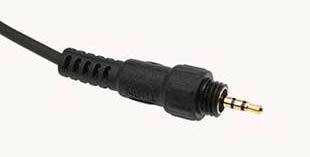
M10
Motorola Single Pin
Motorola:
CLP107, CLP117
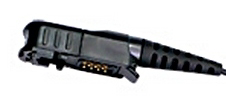
M12
Motorola Multiple Pin
Motorola:
DP2000, DP2400, DP2600, DP3440, DP3441, XPR3300, XPR3500
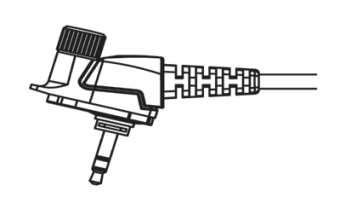
MT1B
Motorola Single Pin
Motorola:
MTP850, MTH500, MTH650, MTH800
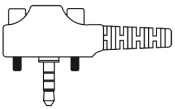
Y2
Vertex Single Pin Right Angle
3.5mm With Screws
Vertex:
VX-160, VX-180, VX-210, VX-210A, VX-231, VX-351, VX-410, VX-420, VX-426, VX-451, VX-454, VX-459, EVX-531
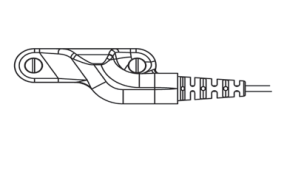
Y6
Vertex Multiple Pin Right Angle
Vertex:
VX-820, VX-821, VX-824, VX-829, VX-920, VX-921, VX-929, VXD-720
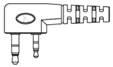
D1
Delta Two Pin Right Angle
Delta:
Pro16, 16L, 200B, 200K
D3
Delta Two Pin Right Angle
3.5mm Stereo + 2.5mm Mono
Delta:
AS300, AS310, AS320
D7
Delta Multiple Pin Right Angle
Delta:
DS400, DS410, DS420
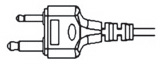
S1
Icom, GME, Vertex Two Pin Straight
3.5mm Mono + 2.5mm Mono
Icom:
IC-F3, IC-F3S, IC-F4, IC-F10, IC-40S, IC-F20, IC-H2, IC-H6, IC-J12, IC-M5, IC-U12, IC-U16, IC-36FI
GME:
TX610, TX6000, TX7000, TX655
Vertex:
VX-200, VX-500, VX-510, VX-520UD
Cobra, Ritron
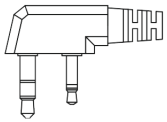
S2
Icom Two Pin Right Angle
3.5mm Mono + 2.5mm Stereo
Icom:
IC-F3G, IC-F3GS, IX-G3GT, IC-F4G, IC-F4GS, IC-F4GT, IC-F43GS, IC-F43GT, IC-F43TR, IC-F11, IC-F11S, IC-F21, IC-F21S, IC-F31, IC-A24
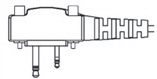
S3
Icom Two Pin Right Angle
3.5mm Mono + 2.5mm Stereo
Icom:
IC-F3G, IC-F3GS, IC-F4G, IC-F4GS, IC-F11, IC-F21, IC-F31, IC-F33, IC-F43, IC-F14, IC-F24, IC-F3023, IC-F4023, IC-41S, IC-41W, IC-41Pro, IC-F3003, IC-F4003, IC-F3130D, IC-4140D
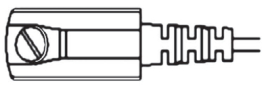
S4
Icom Multiple Pin Right Angle
Icom:
IC-F50, IC-F51, IC-F60, IC-F61, IC-F30G, IC-F30GT, IC-F30GS, IC-F31GS, IC-F31GT, IC-36FI, IC-F40G, IC-F40GS, IC-F40GT, IC-35FIM87/88, IC-F3163, IC-F4163, IC-F3163D, IC-F4163D
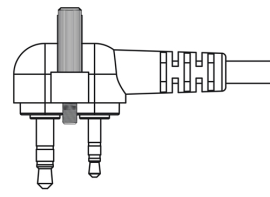
SC1
Simoco Two Pin Right Angle
5mm Stereo + 2.5mm Stereo
Simoco:
SRP9120 SRP9130
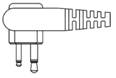
H1
Hytera Two Pin Right Angle
3.5mm Mono + 2.5mm Mono
Hytera:
HYTS2100, TC500, TC600, TC2100, TC446, TC700, TC610, TC620
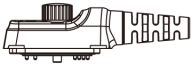
H2
Hytera Multiple Pin Right Angle
Hytera:
PD702, PD782, PD780, PT580, PD780G
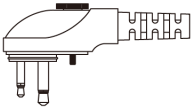
H3
Hytera Two Pin Right Angle
Hytera:
TC700, TC610, TC620, PD500 Series
H5
Hytera Multiple Pin Right Angle
Hytera:
PD600 Series, X1E, X1P, TC380M, TC370M, TC780M, TC780, TC3000, TC610P
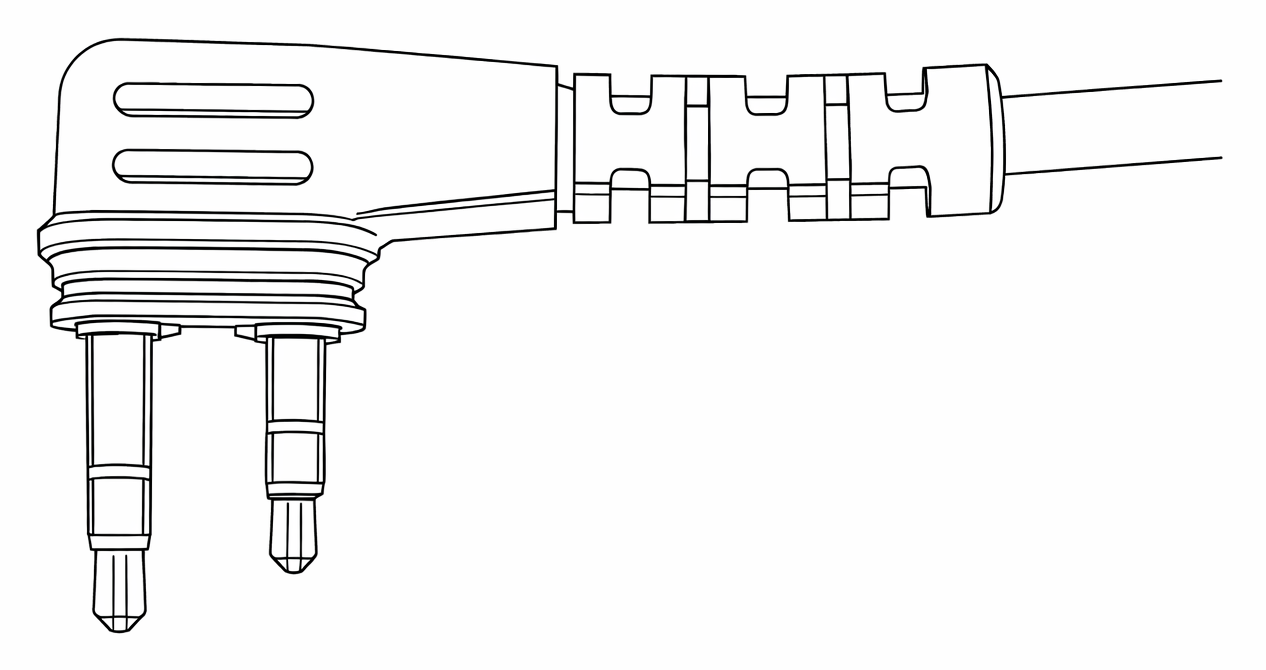
GME
GME Two Pin Connector
Models:
GME TX6160, TX6165, TX6600, CP30, CP40, and CP50 only.
ATEX, UL & IECEx Guide
Please note that Radio Industries Australia Pty Ltd does not classify or take responsibility for the Hazardous Location Settings mentioned in this page, this is just a guide. Please consult your Safety Department for your exact Hazardous Location requirements.
What is Intrinsically Safe?
Intrinsically safe is a term used to describe a collection of devices and equipment that meet the requirements set out by the certification body (ATEX, UL or IECEx) to determine that device or equipment’s safety when used in a hazardous environment.
What is a Hazardous Environment?
A Hazardous Environment is an area where fumes, dust, gas or vapour may cause a fire or explosion when an ignition source is used in the area. For example, you may see a ‘No Naked Flames’ sign in your petrol station when filling up your car, this is because the area is classed as a Hazardous Environment. People who use devices like Two-Way Radios in these environments need to ensure that the device itself complies with the standard set for that particular zone. Often a safety officer will have this information to hand and be able to direct you as to what type of equipment you need for different areas of your plant.
What is the difference between ATEX, UL and IECEx?
The difference between these three is the testing/classification body.
Each rating is created by a recognised standards body with ATEX Being European, UL being American and IECEx often used for international standards. Your company may choose a specific standard to base decisions from.
ATEX Explained
Download the CML ATEX/IECEx Guide HERE - https://www.cmlex.com/wp-content/uploads/hazardous-area-guide.pdf
An ATEX Label will tell you exactly where the equipment can be used based on the Equipment classification and Zones specified. All of the numbers and letters on the label correspond to the level of protection offered and in what environments the equipment can be used. Please consult your safety supervisor for the correct equipment class you require based on the zones you are subject to.
ATEX Equipment is classified by Group, Type of protection, Gas/Dust Group, Temperature class and equipment protection level.
Areas where ATEX must be used is classified by Zones. Each Zone is for a particular Hazardous Environment. Each Zone is explained below. You will then need to use equipment suitable and certified for use the Zone.
ATEX Zones
Combustible Gas & Vapour
| Gas Zone | Description | ATEX Category | EPL | Required Protection |
| Methane | Mines with methane and dust. Equipment remains energised in explosive atmosphere. | M1 | Ma | Two Faults |
| Methane | Mines with methane and dust. Equipment is de-energised in explosive atmosphere. | M2 | Mb | Severe Normal Operation |
| Zone 0 | A place in which an explosive atmosphere consisting of a mixture with air of dangerous substances in the form of gas, vapor or mist is present continuously or for long periods or frequently. | 1G | Ga | Two Faults |
| Zone 1 | A place in which an explosive atmosphere consisting of a mixture with air of dangerous substances in the form of gas, vapor or mist is likely to occur in normal operation occasionally. | 2G | Gb | One Fault |
| Zone 2 | A place in which an explosive atmosphere consisting of a mixture with air of dangerous substances in the form of gas, vapor or mist is not likely to occur in normal operation but, if it does occur, will persist for a short period only. | 3G | Gc | Normal Operation |
Combustible Dust & Fibres
| Dust Zone | Description | ATEX Category | EPL | Required Protection |
| Zone 20 | A place in which an explosive atmosphere in the form of a cloud of combustible dust in air is present continuously, or for long periods or frequently. | 1D | Da | Two Faults |
| Zone 21 | A place in which an explosive atmosphere in the form of a cloud of combustible dust in air is likely to occur in normal operation occasionally. | 2D | Db | One Fault |
| Zone 22 | A place in which an explosive atmosphere in the form of a cloud of combustible dust in air is not likely to occur in normal operation but, if it does occur, will persist for a short period only. | 3D | Dc | Normal Operation |
Equipment Groups
| Equipment Group | Description |
| Group I |
Electrical equipment intender for use in mines susceptible to fire damp |
| Group II | A place in which an explosive atmosphere in the form of a cloud of combustible dust in air is likely to occur in normal operation occasionally. |
| Group III | Electrical equipment intended for use in explosive dust atmospheres |
IECEx Explained
IECEx is very similar to ATEX however some of the definitions for the protection offered do differ so keep that in mind.
Download the CML ATEX/IECEx Guide HERE - https://www.cmlex.com/wp-content/uploads/hazardous-area-guide.pdf
UL Explained
UL is classified by Divisions and Classes. The classes define the substance whilst the Division defines the operating conditions. The classes are also split into subgroups to determine specific and/or equivalent substances.
Classes
-
Class I – Flammable Gases, Vapours or Liquids
-
Group A - Acetylene and equivalent gas groups
-
Group B - Hydrogen and equivalent gas groups
-
Group C - Ethylene and equivalent gas groups
-
Group D - Methane, and equivalent gas groups
-
-
Class II – Combustible Dust
-
Group E - Conductive dust (mechanical – factories, recyclers)
-
Group F - Combustible carbon dust (charcoal & coke dust) - above ground only
-
Group G - Grain dust
-
- Class III – Ignitable Fibres and Flyings (No Subgroups)
Divisions
Division 1 - Locations where ignitable gas/vapor/liquid/dust are present continuously or some of the time under normal operating conditions.
Division 2 - Locations where ignitable gas/vapor/liquid/dust are not likely to exist under normal operating conditions.
Based on the above a rating of ‘Class I, Div 1, Group C, D’ would be given to an environment where Ethylene and Methane are expected to be present continuously
Why Choose Us?
Radio Industries is one of Australia’s longest-running Two Way Radio Communications Companies, operating since 1985. We are Dealers and Distributors of Quality Digital & Analogue Two-Way Radio Systems, and Hearing Protection Equipment.
What Our Customers Think
“Good experience. Product arrived in 2 days, sent express and completely as advertised. Called at one stage about shipping and they were easy to deal with. Happy with the product quality. Would recommend as easy to speak to someone if you have any questions. Great that they request your radio type too to make sure you’re buying the right connection. Thanks guys!”
John Johnson
“Thank you for your assistance with this matter, the whole process from the ‘chat’ onward through invoicing and payment, has been simple and fast. A pleasure to deal with you and your company. Well done from a business perspective, even for an out of the blue approach regarding a relatively minor order.
Regards, and again, thank you for your help.”
Michael Hayes
“Jim and Jacob sorted our order efficiently and quickly. We had our radios here and ready to use 5 days after payment was made. Very impressed with the professionalism of both employees and they really helped us out because we were looking for units that were in high demand and low in stock.”
Tarah Ferguson
Frequently Asked Questions
How Far Can I Get?
Two-Way Radios work on line of sight.
What Channels Can I Use?
CB or Private frequency.
Which Radio Is Best?
There is no definitive answer as there are too many radios to choose from, they work on different systems, contact us for a quote.
Do I Need A Private Frequency?
If you are using your radios on a crane then a private frequency is required in order to comply with OH&S.
If you will be using radios for safety reasons then a private frequency is recommended in order to prevent unnecessary outside interference that can easily be caused with standard UHF CB radios.
What is the difference between a Two-Way Radio, Walkie Talkie and Handy Talkie
Nothing, they all refer to the same piece of equipment however a Two-Way Radio is the preferred terminology in industry. Walkie Talkies and Handy Talkies often refer to toys or recreational two-way radios.
Customers Also Bought…
You may also like…
-
Kenwood KMC-45 Two-Pin Speaker Microphone
$156.99 Inc GST -
Bravo Heavy Duty Acoustic Tube Earpiece – Superior Clarity – K
$60.50 Inc GST -
Kenwood KSC-356 Multi-Bay Rapid Charger
$1,170.21 Inc GST -
Bravo Nylon Radio Pouch – Tactical Black, Adjustable Fit
$49.99 Inc GST -
Kenwood KNB-84L Battery
$154.00 Inc GST